
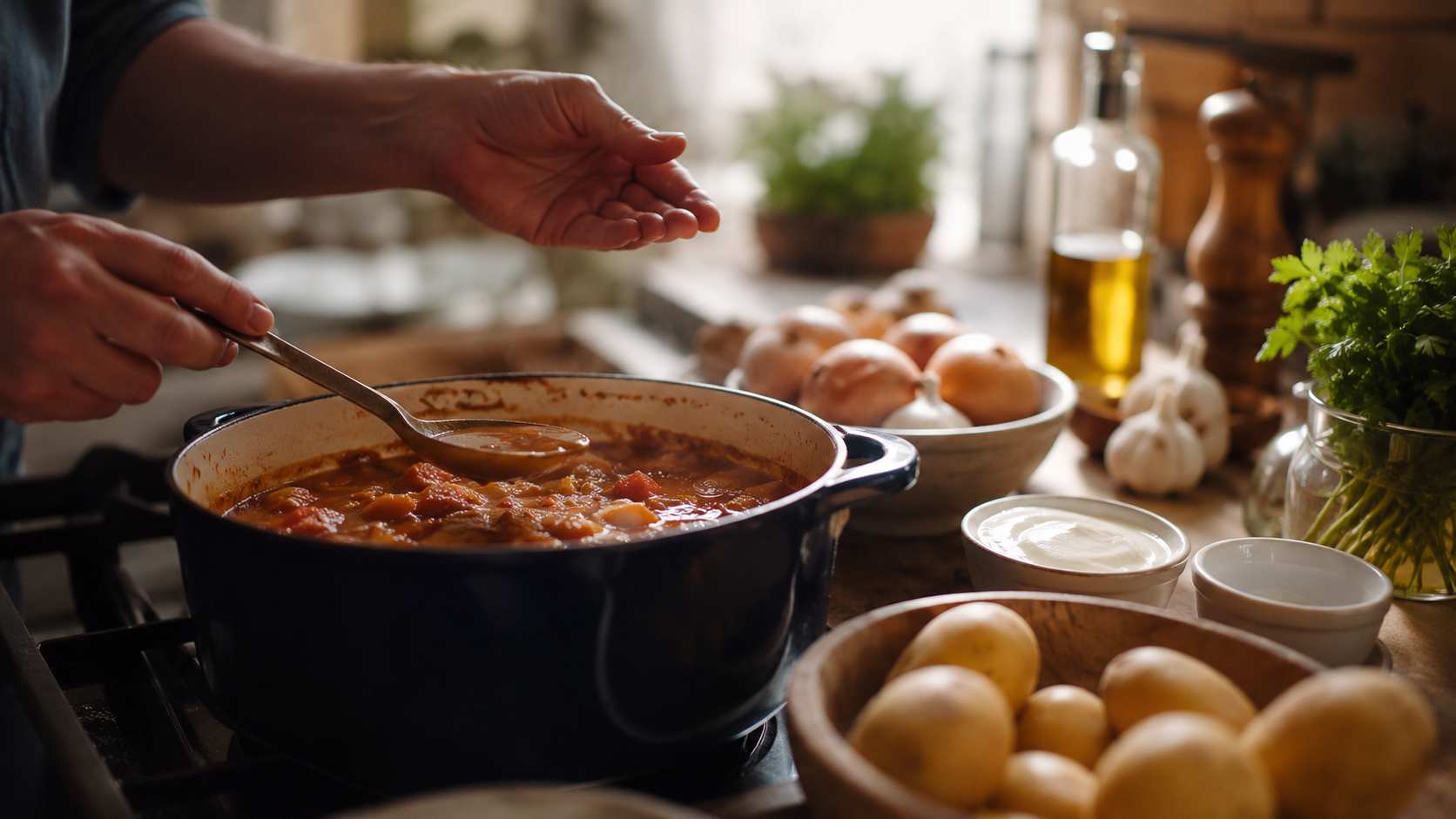
Over-salting is the most common kitchen mistake there is, usually because seasoning was added twice by someone who forgot they had already done it, or because a stock cube arrived in a dish that was already seasoned. The bad news is that salt cannot be removed. The good news is that almost every over-salted dish can still be served, provided you understand what you are actually doing to it.
Why the potato trick does not work
The advice about dropping a raw potato into an over-salted pot is the most persistent piece of misinformation in home cooking. The theory is that the potato absorbs the excess salt.
It does not. A potato absorbs salty liquid, in the same proportion of salt to water as the rest of the pot. Taking it out removes a little salt and a little liquid together, leaving the concentration exactly where it was. What actually helped, on the occasions people remember it working, was the extra cooking time and the starch the potato released.
What actually works: change the ratio
Since the salt is staying, the only real strategy is to increase everything else around it, so the same amount of salt is spread through more food.
Add unsalted liquid. For soups, stews and sauces, more water, unsalted stock, milk or cream directly reduces the concentration. Add a little at a time and taste as you go. The cost is that you dilute the flavour along with the salt, so expect to rebuild with herbs, aromatics or a longer simmer afterwards.
Add more bulk. Another tin of tomatoes or beans, more vegetables, extra rice or lentils, or a second batch of the unsalted base all work, and unlike water they add flavour rather than removing it. This is the best option when it is available, though you may end up cooking for more people than you planned.
Add starch or dairy. Potatoes, pasta, rice, bread, cream, yoghurt, crème fraîche and unsalted butter all mute salinity, partly by dilution and partly because fat and starch coat the tongue. A spoonful of cream can transform an aggressively salty sauce.
Balancing rather than diluting
When you cannot add volume, you can sometimes distract from the salt instead.
- Acid — lemon juice or vinegar cuts across saltiness and makes it read as seasoned rather than salty. Add cautiously, a teaspoon at a time.
- Sweetness — a small amount of sugar, honey or a sweet vegetable such as carrot softens the edge. Too much and you trade one problem for another.
- Fat — butter, oil or cream blunts the perception of salt without changing the quantity.
These are perceptual fixes rather than actual ones. The salt is still there, which matters if you are cooking for someone on a low-sodium diet.
Fixing it on the plate
If the pot cannot be rescued, the plate often can. Serve an over-salted stew, curry or braise with a generous quantity of plain unsalted rice, potatoes, couscous or bread, and the meal balances even though the sauce itself is still strong. A dollop of plain yoghurt or soured cream on top does the same job.
Treating it as a concentrated sauce rather than a dish in itself is often the most honest solution, and nobody at the table need know.
When to stop trying
Some things cannot be saved. A brine or cure left too long has seasoned the food all the way through, and there is no outside to dilute. Very salty small quantities, such as a spoonful of ruined sauce, are usually faster to remake than to rescue.
If a dish has crossed from salty into inedible, and dilution would need more liquid than the pan holds, start again with the salt lesson learned.
Avoiding it next time
Season in layers and taste at each stage. Add salt in small amounts, stir, wait a moment for it to dissolve, then taste again. Be careful with stock cubes, soy sauce, anchovies, capers, olives, bacon and hard cheese, all of which bring their own salt. Salt reduces along with everything else, so a sauce you intend to reduce should be seasoned at the end rather than the beginning.
The other common cause is two cooks, or one cook and one interruption. If you are sharing a kitchen, or you leave a pot and come back to it, say out loud or write down that the salt has gone in. It sounds excessive until the evening it saves dinner.
Finally, be aware that food tastes less salty when it is very hot. Judge seasoning at something close to serving temperature, or you will consistently over-season anything you taste straight out of a boiling pan.